
If you’re looking for hormone-free birth control, you’ve probably landed on two options: the diaphragm and the copper IUD. Both skip the hormones. Both are effective. But they work very differently, and your day-to-day experience with each one could not be more different.
This is not a “one is better” conversation. It’s a “which one fits your life” conversation. So let’s break it down honestly. Here’s a quick comparison chart, and then we’ll dive deeper into each topic covered in the chart.
Note: There are also hormonal IUDs, but since we’re talking hormone-free options, we’ll focus on the copper IUD here.
Quick Comparison: Diaphragm vs. IUD
| Caya Diaphragm | Copper IUD | |
| Hormone-free | Yes | Yes |
| Effectiveness (optimal use) | 95% | ~99% |
| Stays in your body | Only during sex | Up to 10–12 years |
| Inserted by | You | A healthcare provider |
| Procedure required | No | Yes |
| Effect on periods | None | Often heavier, more cramping |
| Fertility returns | Immediately | Immediately after removal |
| Lasts | Up to 2 years | Up to 10–12 years |
| Typical cost | $75–$90 | $0–$1,000+ (with/without insurance) |
| Prescription needed | Yes | Yes |
First, What Are We Even Comparing?
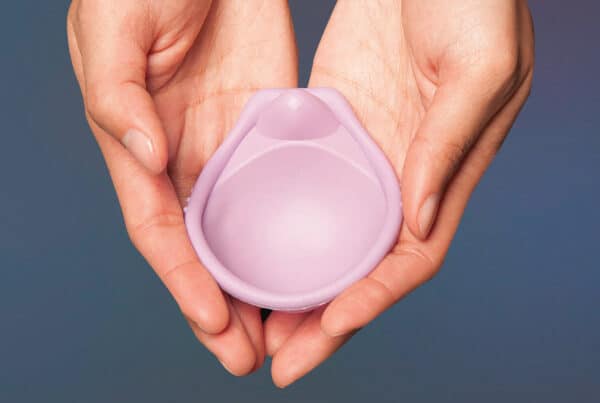
The Diaphragm (specifically, the Caya® contoured diaphragm) A soft, flexible silicone cup you insert before sex. It sits over your cervix and works as a barrier to keep sperm from reaching your egg. You use it with a water-based contraceptive gel for added protection. Then you remove it a few hours later. It’s reusable for up to two years.
The Copper IUD (In the opening image on this blog) A small, T-shaped device a provider inserts into your uterus during an office procedure. It stays there for up to 10 to 12 years. The copper itself acts as a spermicide, creating an environment that is hostile to sperm. There are no hormones, but there is a permanent presence in your body.
How Effective Is Each One?
This is the big question, and it deserves a straight answer.
- Copper IUD: About 99% effective. It’s one of the most effective birth control methods available.
- Caya Diaphragm: With optimal use alongside a contraceptive gel, Caya has a 5% pregnancy rate over 12 months. That’s 95% effective when used correctly and consistently. With typical use (with gel, but not always perfectly), that number is 83%. (Source: Caya clinical data.)
It’s also worth saying what our own brochure says: no contraceptive method guarantees 100% protection from pregnancy. That includes the copper IUD. The more consistently and correctly you use Caya with its contraceptive gel, the more protection it offers.
The copper IUD does have a higher effectiveness rate. That’s just honest. But effectiveness isn’t the only thing that matters to every woman, and it’s not the only thing to consider when choosing birth control.
The Biggest Difference: Is It in Your Body or Not?
This is where Caya and the copper IUD part ways completely.
The copper IUD is inserted by a provider and stays inside your uterus. All the time. Whether you’re having sex or not, whether you want birth control at that moment or not. For many women, that’s great. You never think about it. It just works.
But some women don’t want that. They want birth control to be something they choose to use, in the moment they need it. Not something that lives inside their body 24/7.
That’s Caya. You insert it before sex. You remove it a few hours later. The rest of your time? Your body is completely your own.
One Mumsnet user who had used Caya for five years put it simply: “Living hormone free is amazing.”
Another reviewer shared on a Canadian pharmacy site: “I had a copper IUD for most of my life but recently chose to have it removed because my periods are really heavy and the copper IUD contributes to that. I am really happy I found this option. No doctor appointments, no side effects.”
What Does the Insertion Experience Look Like?
Copper IUD: Inserted by a healthcare provider in a clinic. Most women feel significant cramping during and after the procedure. Some describe it as brief but intense. A 2025 Reddit study published in Perspectives on Sexual and Reproductive Health found that pain and loss of control were among the top concerns women shared about IUDs. Once it’s in, most women adjust. Some don’t.
WebMD notes that with a hormonal IUD you may also experience PMS-like symptoms including acne, breast tenderness, headaches, or mood changes. With the copper IUD specifically, heavier periods and more cramping are common, especially in the first few months.
Caya: You insert it yourself. No appointment needed beyond getting your initial prescription (from your provider or via our telehealth provider). About 80% of women get the positioning right just from reading the directions. Your provider can also walk you through it during an office visit, which bumps that success rate to 94%. (Source: Caya clinical data.)
As one user on The Lowdown said of Caya: “My very favorite thing about the Caya is that there really are no side effects. I am not putting anything into my body that is changing the way my body functions. I put it in, leave it in a while, and then I remove it.”
What About Periods?
This one matters more than people talk about.
Copper IUD: Many women experience heavier, longer, or more painful periods, especially in the first 3 to 6 months. For some, this improves over time. For others, it doesn’t.
Charlotte Freed, who spoke with KPBS about her experience, described the dilemma honestly: “The trade off is the possibility of having a child when you don’t want to, hormones messing up your personality, or having horrible cramps and bleeding for 12 days straight.”
Caya: No impact on your period. At all. Your cycle stays completely natural.
Cost Comparison
Copper IUD: The device and insertion can cost anywhere from $0 (with good insurance) to $1,000 or more without coverage. Lasts up to 10 to 12 years, so the long-term value is strong.
Caya: Typically $75 to $90 for the device and requires a prescription (from your provider or via our telehealth provider). Lasts up to two years. No procedure costs. No clinic visit required for insertion. Over time, both are quite cost-effective compared to monthly methods.
Flexibility and Future Fertility
Both methods allow fertility to return quickly after you stop using them. With the copper IUD, a provider removes it and you’re good to go. With Caya, you simply stop using it.
The difference is in the day-to-day flexibility. With Caya, you decide each time whether you need birth control. That kind of control matters to a lot of women. Especially those whose lives, relationships, or family plans are still evolving.
So Which One Is Right for You?
Here’s a simple way to think about it:
Copper IUD might be a better fit if you:
- Want something long-term that you never have to think about
- Are comfortable with a provider procedure
- Don’t mind the possibility of heavier periods
- Want the highest effectiveness rate available without hormones
Caya might be a better fit if you:
- Want to keep birth control out of your body except when you need it
- Prefer a method you control entirely, on your own timeline
- Have lighter periods you don’t want disrupted
- Are looking for a lower-cost, no-procedure option
- Are breastfeeding, managing a health condition, or just done with anything altering your body chemistry
Both are real, valid, hormone-free choices. Neither is wrong. They just serve different needs and different women.
How to Get Caya
Caya requires a prescription in the US, but you don’t need a fitting or a clinic procedure to use it. You can get a prescription from your local provider or through a telehealth visit from home. Visit our Get Caya page for full details.
Have more questions? Check out our FAQ or browse the Caya blog for more on hormone-free birth control options.
The information included in this blog post is accurate as of publication. For the most current details about Caya, or if you have specific questions about your contraception options, please visit our FAQ at Caya.US.com or consult with your healthcare provider.